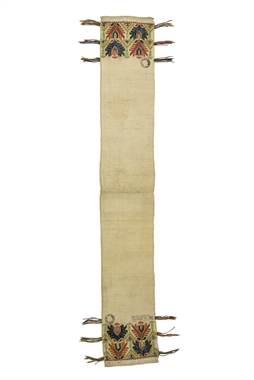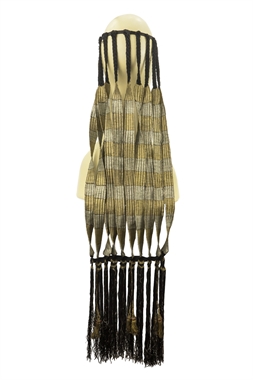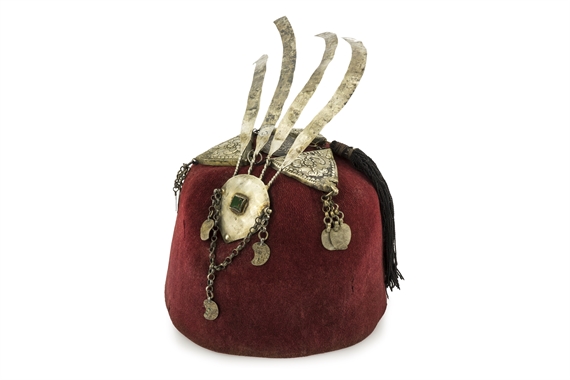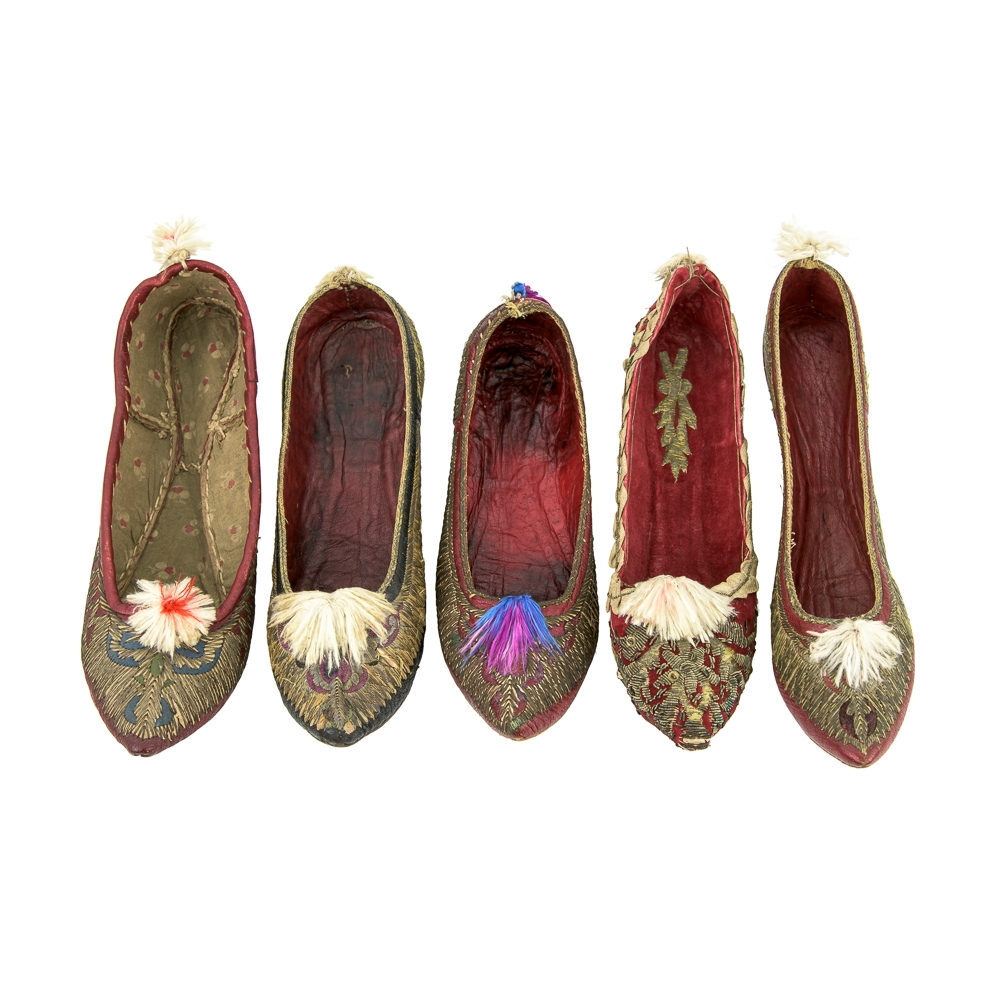
The representation of the types of objects in the Collection of Folk Costumes of Bosnia and Herzegovina leads to the conclusion that it was formed at the very beginning of the Ethnographic Museum's activities, when the collection and exhibition work was focused on certain cultural and geographical themes. Most of them date from the second half of the 19th and the beginning of the 20th century. The largest unit is the so-called Dinaric collection, which includes an older version of clothing from the area of northwestern Bosnia bordering the region of Lika and the Dalmatian hinterland. A valuable part consists of the so-called Turkish-oriental clothing, which testifies to the lifestyle of the bourgeois society of Bosnian towns, the developed production of čaršija crafts and the trade between East and West. The women's clothing inventory is particularly well preserved, and individual items (decorative towels, scarves, shirts) that mostly arrived in homes as dowries of young brides (boščaluk) are particularly noteworthy. A very small number of items from the region of Bosnian Posavina represent a transition towards the Pannonian type. After the breakup of Yugoslavia, the Collection has been replenished exclusively by donations. The collection consists of about 1,800 items of predominantly ceremonial clothing from that multinational state, and differences in clothing indicate class and status rather than national or religious identity. The collection is significant due to varieties of clothing from the 19th century that can no longer be found in the field but only in photographs or in museums.
We use cookies to track visits to our pages (Google Analytics) for the purpose of improving the pages. The statistics are collected anonymously, and by accepting, you agree to the use of cookies. Find out more